
• Induction Electromagnetic Heating Roller Can Control Temperature Precisionly 50-420  Celsius Degree

    2026-05-27 Induction Electromagnetic Heating Roller Can Control Temperature Precisionly 50-420 Celsius Degree

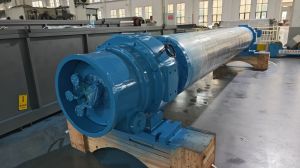
    I. What is an Induction Electromagnetic Heating Roller? It is a cylindrical roller that generates its own heat and is used in the continuous processing and production of industrial materials. The basic principle of heating involves using coils inside the roller to generate an electromagnetic fiel...

  • How to select an anilox roller

    2026-05-15 How to select an anilox roller

    When selecting an anilox roller, it is necessary to consider a combination of factors, including the required print quality and detail, the substrate material, compatibility with the printing plate, the type of ink or coating, and overall cost considerations. Select the anilox line screen accordi...

  • How to Prevent Polyurethane Rubber Coating from Delaminating?

    2026-05-15 How to Prevent Polyurethane Rubber Coating from Delaminating?

    One common problem with polyurethane rubber coating is delamination, where the coated layer separates from the roller core. However, by paying attention to both polyurethane material selection and the coating process, delamination can be effectively prevented. According to different working conditio...

  • Precision Chill Roll Technology Helping Improve BOPP & BOPET Film Quality

    2026-05-15 Precision Chill Roll Technology Helping Improve BOPP & BOPET Film Quality

    In the production of biaxially oriented films such as BOPP, BOPET, and other high-performance polymer films, the performance of the Chill Roll plays a decisive role in determining film quality, surface smoothness, crystallinity, and production stability. To meet the increasing demands of the glob...

  • Chill Roller Issues Causing Poor Film Quality? Uneven Cooling and Wrinkles in Extrusion? High-Quality Chill Rollers Are the Fix!

    2026-05-13 Chill Roller Issues Causing Poor Film Quality? Uneven Cooling and Wrinkles in Extrusion? High-Quality Chill Rollers Are the Fix!

    In plastic film and sheet production such as BOPP, BOPET, BOPA, CPP, PE, and extrusion coating/lamination lines — the chill roller (also called cooling roller or casting roller) is a core component. It rapidly quenches the molten polymer as it exits the die, solidifying the web while controlli...

  • Elevating BOPP Film Production with CFRP Contact Rolls

    2026-05-13 Elevating BOPP Film Production with CFRP Contact Rolls

    In today's high-speed BOPP film production environment, maintaining consistent product quality while maximizing efficiency is more challenging than ever. As line speeds continue to push boundaries, traditional metal contact rolls are increasingly becoming a limiting factor. To meet these evol...

  • Superior Quality Godet Roller can Help Optimize Carbon Fiber, PTFE Yarns etc Fiber Quality

    2026-05-04 Superior Quality Godet Roller can Help Optimize Carbon Fiber, PTFE Yarns etc Fiber Quality

    The godet roller serves as a core temperature-controlled transmission component in production lines for synthetic fibers(like PTFE yarn, carbon fiber and so on). At its core, the device consists of a standardized, fixed heating module comprising an electromagnetic coil and an electronic control syst...

  • Is your molten material still being solidified the old-fashioned way — slow, messy, and inefficient?

    2026-04-29 Is your molten material still being solidified the old-fashioned way — slow, messy, and inefficient?

    Let's talk about one of the most important yet often overlooked pieces of equipment in the chemical industry: the Drum Flaker (also known as Rotary Drum Flaker or Cooling Drum Solidifier). What exactly is a Drum Flaker? In simple terms, a drum flaker is a continuous solidification machine ...

  • Doctor Blade Coating Technique

    2026-04-29 Doctor Blade Coating Technique

    In doctor blade coating, the film thickness and morphology are jointly governed by the coordination of the upstream and downstream menisci. The upstream meniscus, through the straightness of the wetting line, dominates the lateral spreading of the solution and limits the coating speed. The downst...

FIRSTprevious pageLAST