

I. What is an Induction Electromagnetic Heating Roller?
It is a cylindrical roller that generates its own heat and is used in the continuous processing and production of industrial materials. The basic principle of heating involves using coils inside the roller to generate an electromagnetic field. The magnetic field lines cut across the metal surface, generating Joule heat, thus heating the roller itself. The roller surface then exchanges heat with the material being processed, and a closed-loop temperature control system maintains the roller at the set working temperature.
Since its introduction, this product has been widely used in various deep processing technologies for polymer materials, such as PVC processing, chemical fiber spinning, composite material processing, drying of various materials, and stretching of inorganic materials. Electromagnetic heating rollers offer excellent temperature performance and advantages in environmental protection and safety that traditional thermal oil systems lack. They are an indispensable heating source, especially in the production of some high-temperature, high-precision materials. Since its invention, the electromagnetic induction heating roller has quickly gained recognition across various industries. However, due to the relatively higher cost of electromagnetic heating rollers compared to thermal oil rollers or other heating methods, their current market penetration is not high.
II. Structure of the Electromagnetic Heating Roller
The internal structure of electromagnetic induction heating rollers is relatively complex. Based on different production process requirements, electromagnetic heating rollers are divided into two structural forms: single-axis and double-axis. This refers to whether the roller body is supported at one end or both ends. Single-axis rollers are generally more common in chemical fiber spinning processes, and are also used in drying and stretching of special plastic films. Double-axis rollers have a wider range of applications, such as calendering, polishing, straightening, drying, compounding, molding, heat setting, and heat transfer of materials.
Single-axis electromagnetic heating rollers are divided into integrated and split structures according to different production processes. There are also integrated structures that combine with the motor drive. However, the main structure always consists of a coil device, roller shell, transmission support mechanism, and temperature measurement mechanism.
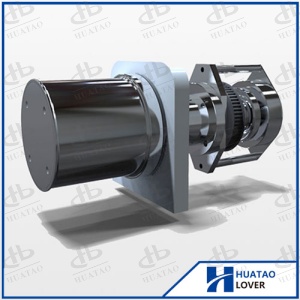
The structure of a double-axis electromagnetic heating roller consists of a left end cover, a right end cover, an inner shaft heating coil, and a temperature measurement device.
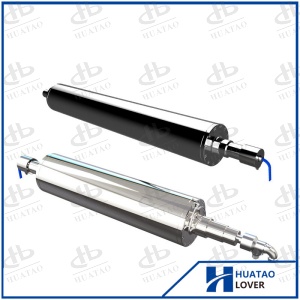
Regarding the internal structure of the electromagnetic heating roller, it consists of a metal roller body, support shaft, induction coil, and temperature sensor. Below, we will briefly explain the internal structure using a double-axis electromagnetic heating roller as an example:
III. Temperature Regulation and Control of Electromagnetic Induction Heating Rollers
1. Temperature Measurement Methods: Based on the temperature measurement method, it can be divided into direct temperature measurement and indirect temperature measurement.
a. Direct temperature measurement involves using a temperature sensing element to directly measure the temperature on the surface of the roller body or inside the roller wall. Typically, temperature sensing elements are installed on the inner wall of the roller for temperature acquisition. K-type thermocouples or PT100 sensors are commonly used. The K-type thermocouple method is relatively inexpensive, but requires special compensating wires (not needed for transmission via transmitters). Compared to resistance thermometers, it offers better stability, although the cost of the sensing element is higher.
b. Indirect temperature measurement generally includes infrared temperature measurement or air temperature measurement.
Infrared temperature measurement: This method utilizes the blackbody radiation law for temperature measurement. However, due to variations in material properties and roller surface roughness, the corresponding reflectivity will differ. Furthermore, factors such as the detection angle and distance of the infrared receiver, the cleanliness of the roller surface (different levels of cleanliness significantly affect reflectivity), and the operating environment can lead to a higher risk of significant measurement errors or inaccuracies.
Air temperature measurement is commonly used in electromagnetic heating rollers for chemical fiber production, and is typically implemented using a split-type structure. This involves creating a groove at a suitable location on the end face of the roller body near the drive side. The temperature sensor is placed in the middle of this groove. When the roller wall heats up, the air in the groove is heated, and the roller maintains a relatively constant temperature during high-speed rotation. The temperature control system performs PID calculations on the sampled temperature and then adjusts the current of the induction coil accordingly.
2. Temperature Measurement Locations:
a. Measuring air temperature, a common method of indirect temperature measurement, frequently used in some chemical fiber production processes.
b. Measuring the roller wall, which involves drilling a varying number and length of small temperature measurement holes in the roller wall as needed to detect the temperature.
c. Measuring the roller surface, generally using infrared thermometry or contact-type roller thermocouples. This method is less reliable and is generally not used.
3. Temperature Transmission Methods
a. Direct Signal Transmission: The thermocouple or resistance thermometer signal is transmitted directly to the temperature control unit;
b. Signal Conversion: The thermocouple or resistance thermometer signal is first processed through signal conversion before being transmitted to the temperature control unit. The converted signal can be a commonly used industrial control signal such as 4-20mA, and can also be transmitted wirelessly or via wired communication as needed. Wireless transmission requires an independent battery power supply, which is not an ideal method for use in rotating rollers.
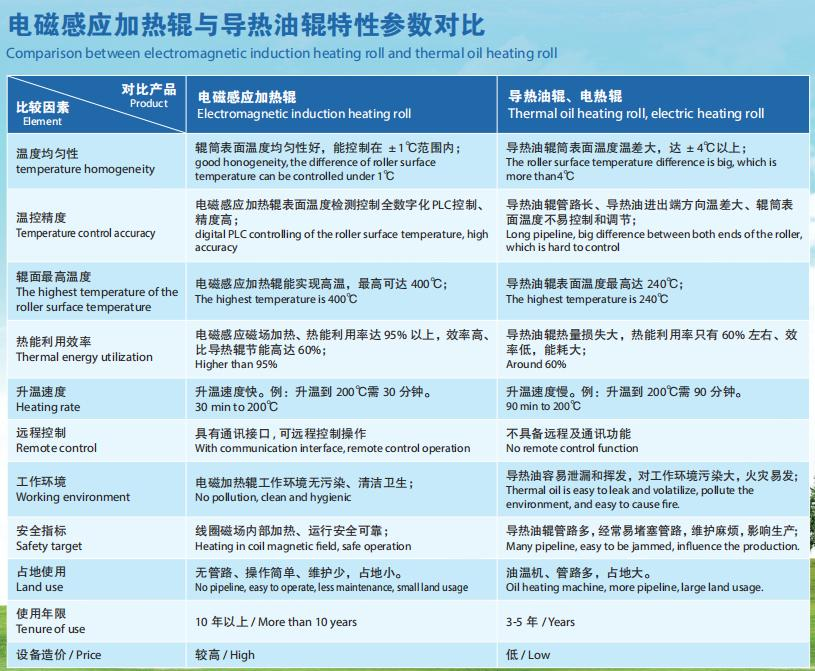
VI,Comparaion between Induction Heating Roll VS OIL water heating roll
can not be empty
can not be empty

HUATAO GROUP - ROLLS
Address: No.298 Zhonghua North Street, Shijiazhuang 050000 China.
Tel: +86 0311 80690567
Email: sale08@huataogroup.com
 WhatsApp & WeChat : +86 13383112591